

Start mapping career pathways with what your organisation already has
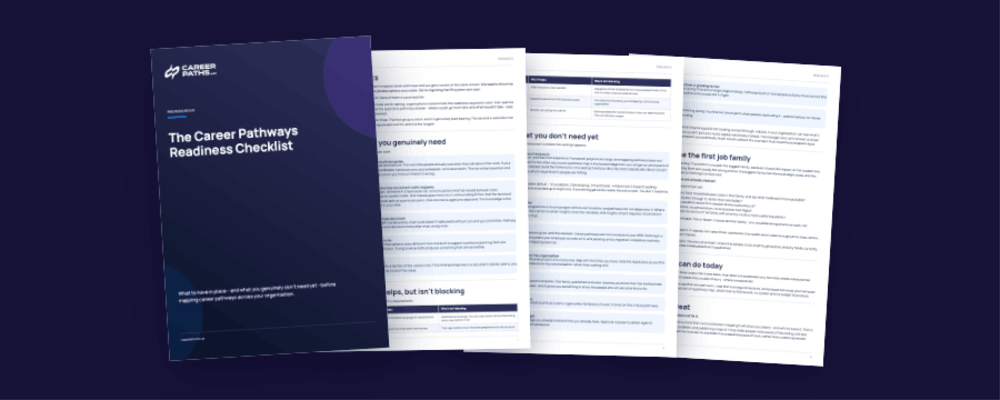
Most HR teams put career pathways off because they believe the groundwork isn't done — the competency framework isn't finished, the job descriptions are a mess, the HR system is mid-migration. This checklist separates the handful of things you genuinely need from the much longer list of things people wait for and don't actually require.
Career Pathways Readiness Checklist
Tell us where to send it. One email with the PDF, and nothing you didn't ask for.
"*" indicates required fields
What's inside
The three-group checklist — what you genuinely need, what helps but isn't blocking, and what you don't need yet
Nine things organisations wait for that aren't prerequisites — including the competency framework, the job description clean-up and the system migration, with what each delay actually costs you
How to choose your first job family — a five-question test, and why the biggest or loudest family is usually the wrong answer
The three-people test — a single question that tells you whether a family's routes are clear enough to map
What a first pass looks like — scope, who needs to be in the room, and a plain definition of "done enough to be useful"
One exercise you can do at your desk today, on a single sheet of paper
Who it's for
Written for HR, talent and L&D leads in UK organisations of roughly 250 to 5,000 employees — particularly anyone who has been told to wait for something else to finish first. It assumes you have some influence over how careers information is presented and someone senior you'd need to bring with you. It will be less useful if your organisation already has published pathways and you're looking to improve them, or if you're under 100 people, where the roles are usually few enough that a map is a conversation rather than a project.
How long it takes
Nine pages, about twelve minutes to read. The first-family test at the end is designed to be worked through in a single meeting with two or three colleagues.
By the end you'll know whether you can start now — and most organisations can.
You'll also have chosen the job family to start with, and be able to explain to whoever asks why you're not waiting for the framework.