

The career map your organisation already has — in everyone's heads, in no one's hands.
Somewhere in your organisation, someone knows how you get from Customer Service to Operations Management. The route exists; people have walked it. But it's not written down anywhere an employee can find it — so to most of your people, it may as well not exist.
CareerPaths career visibility software puts every role, skill, competency and pathway in one place, visualised, explorable and consistent — so progression stops being tribal knowledge and starts being visible to everyone.

What invisible progression actually costs you.
It looks like this: an employee who would have stayed for the right next role resigns, and the exit interview reveals the role existed all along — they just couldn't see it. A manager postpones a career conversation again, because without structure it's the hardest meeting in their calendar. Two departments describe the same skill three different ways, so nobody can say what the organisation is actually good at. And HR fields the same line in every engagement survey: "I don't know how to progress here."
None of this is a people problem. It's an information architecture problem — and those are solvable.
A normal week, with the map switched on.
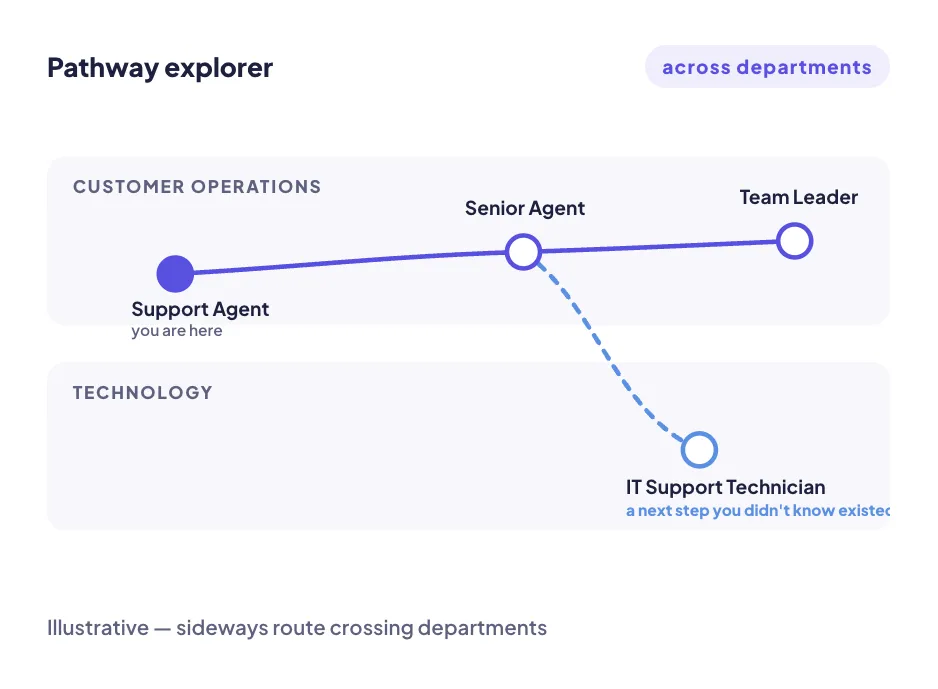
Monday, an employee browses the pathway map and finds a sideways move into a department she'd never considered. She compares her profile against the role: two competencies short, one level each. The platform suggests the resources and qualification that close the gap. She adds them to her development plan and books her 1:1.
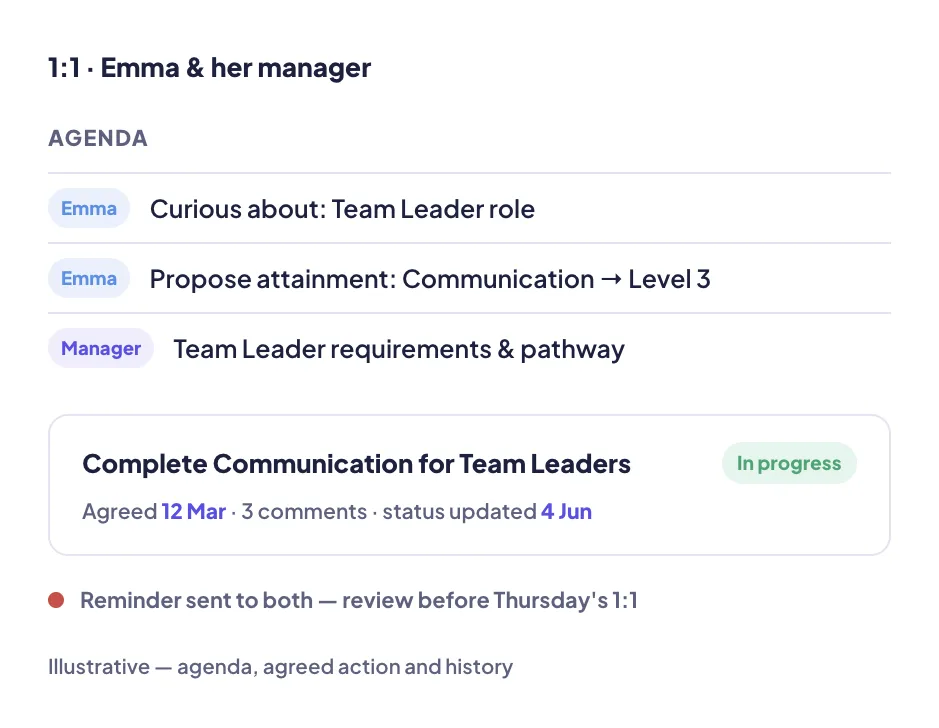
Employees prepare 1:1 agendas, propose skill attainment, and bring the roles they're curious about. Managers respond with role requirements and pathway data instead of a blank page. Agreed actions get statuses, comments and history — so the conversation in March is still alive in June. Notifications keep both sides honest.
The building blocks.
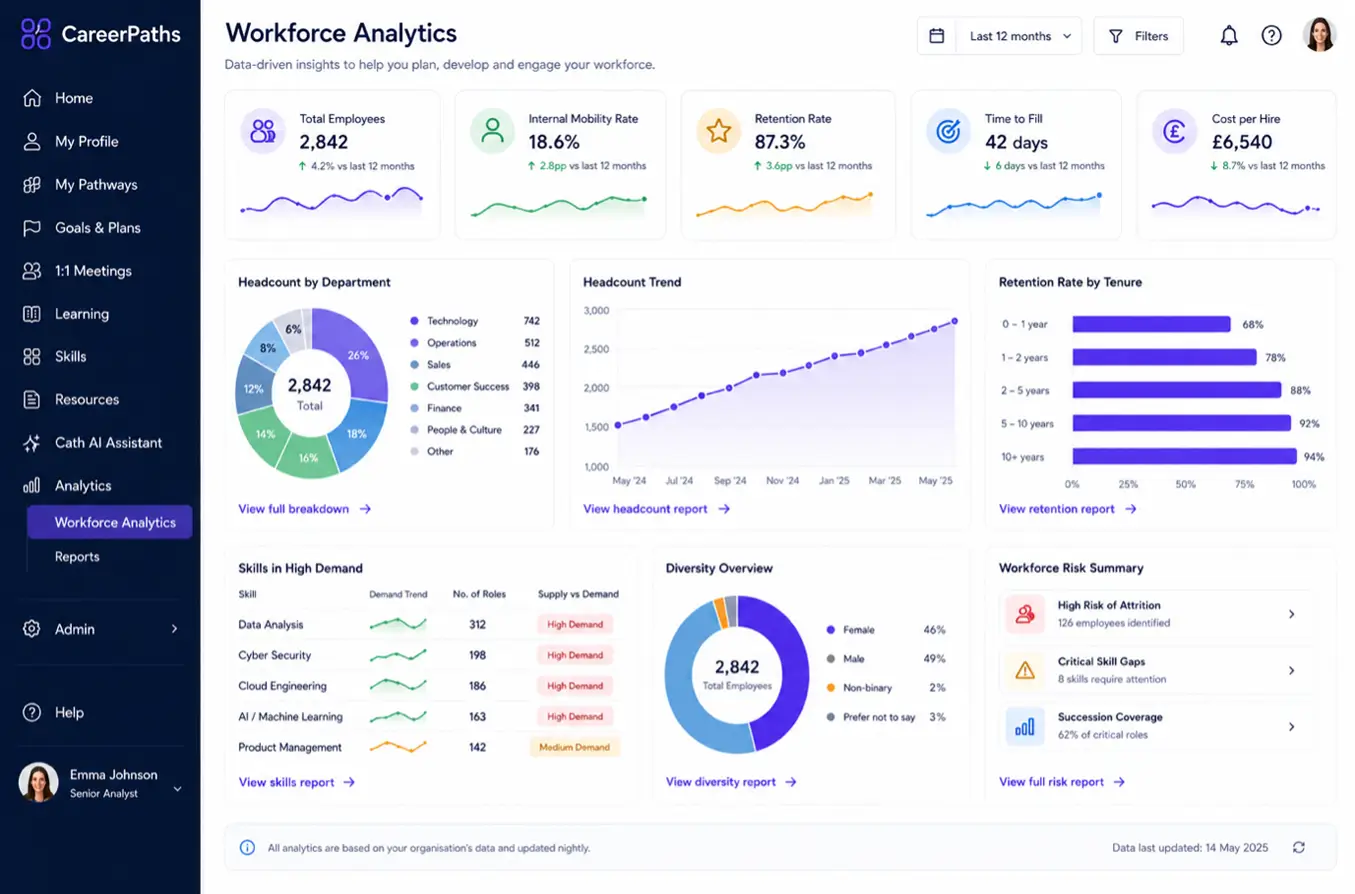
Six capabilities, reading from the same career architecture — so what employees see, managers discuss and HR reports all stays connected.
Role architecture.
Roles, job families, departments and teams — each role carrying its purpose, description, required and desirable skills, competencies at defined levels, qualifications and learning resources. One definition, used everywhere: profiles, pathways, gap analysis and conversations all read from the same source, which is where consistency (and fairness) comes from.
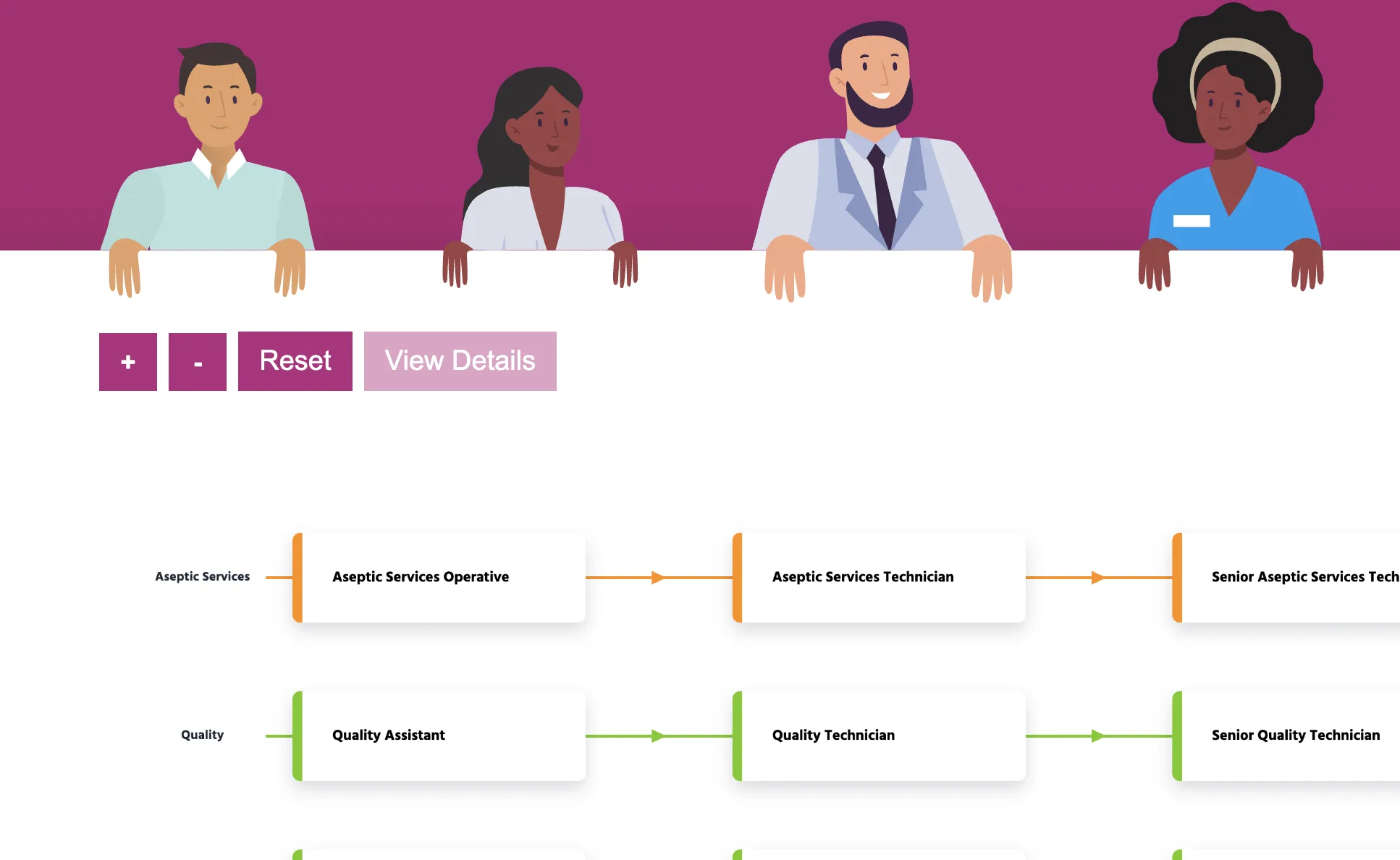
Pathway visualisation.
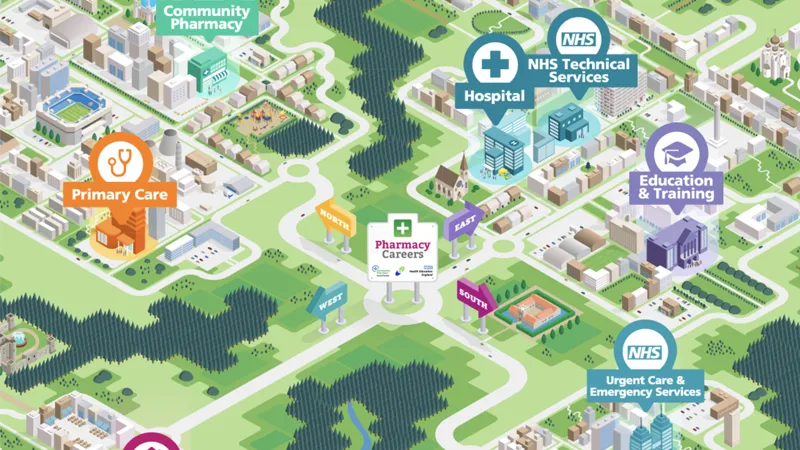
Link roles vertically and laterally, and the platform generates explorable pathway maps — whole organisation, by department or team and to visualise employees' own pathway options. Hover over any role for its requirements; click through for the full profile.
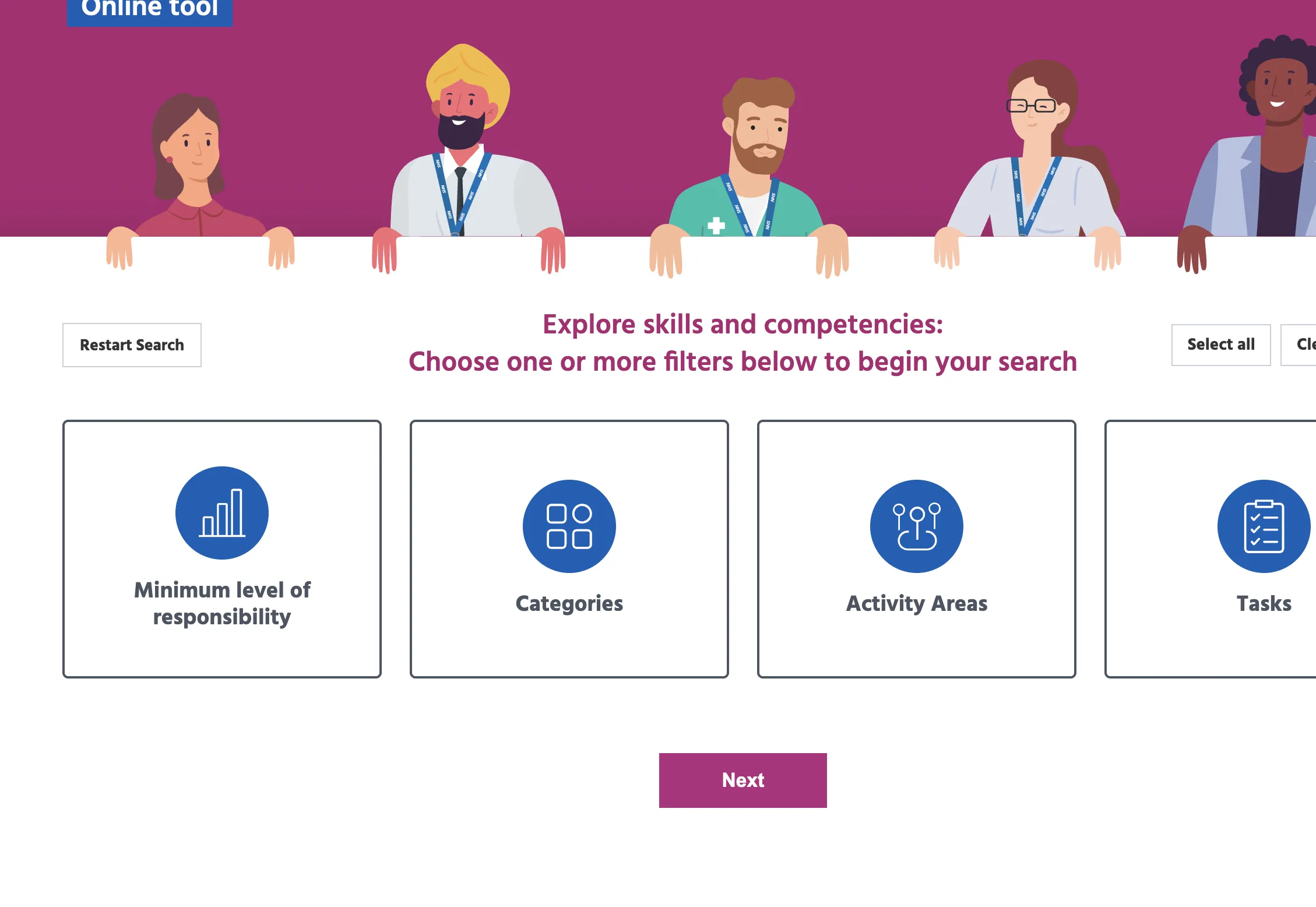
Skills, competencies and levels.
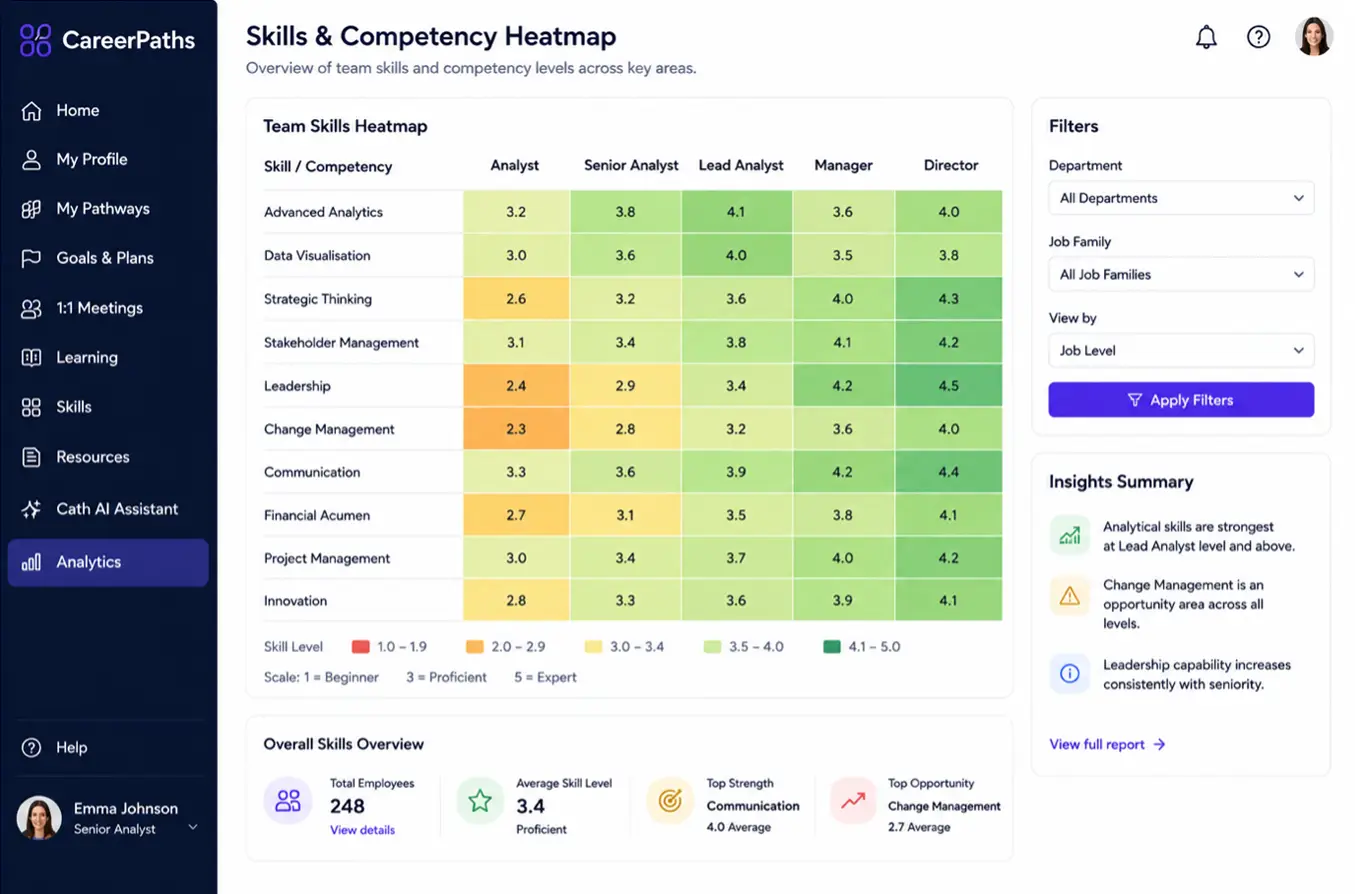
Define each capability once, with level descriptions that make expectations concrete. Employees propose attainment; managers confirm it — so your skills data reflects agreed reality, not self-assessment optimism. And it's searchable: find everyone at level 3 or above in the skill you suddenly need.
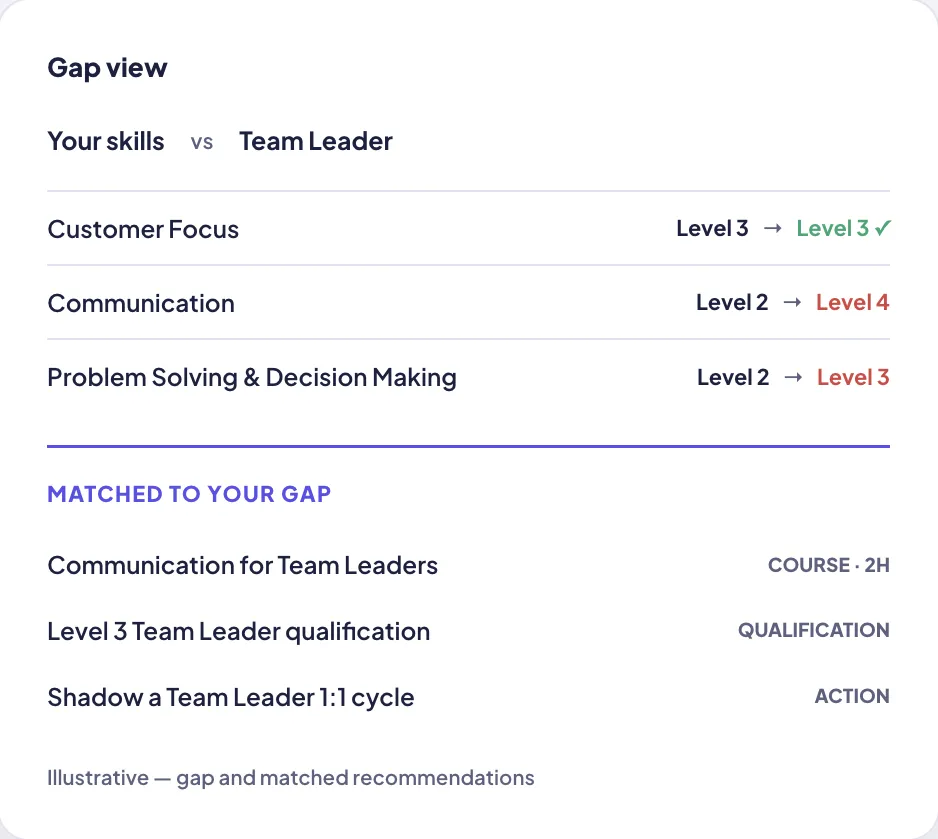
Gap analysis and personalised learning.
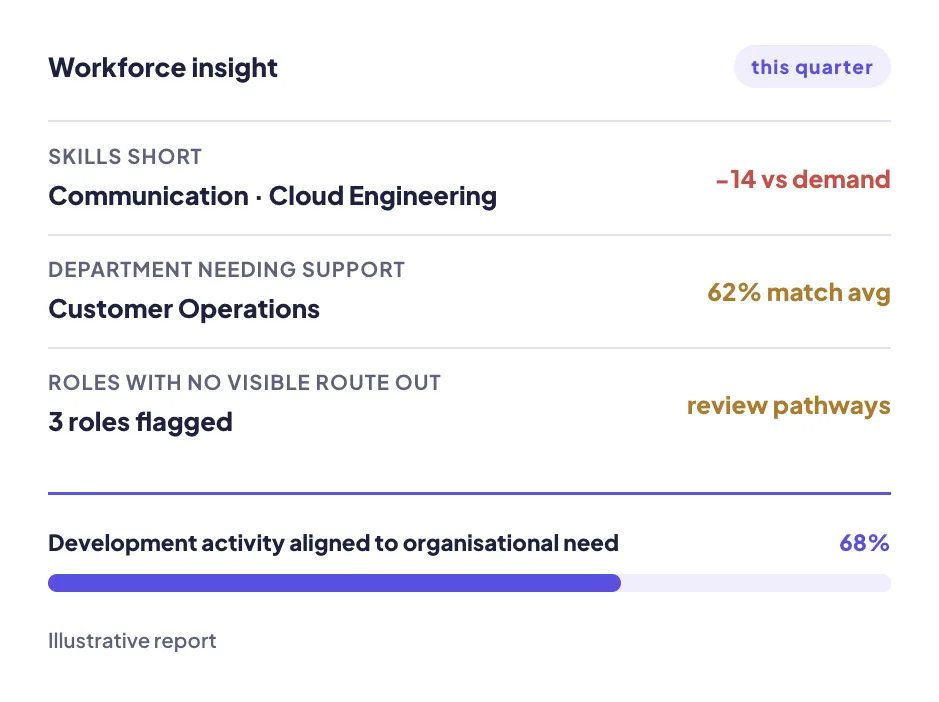
Current profile versus any future role, with the specific missing pieces — feeding development plans and learning recommendations matched to the gap. Organisation-wide capability reporting is on our roadmap.
Career conversations and development plans.
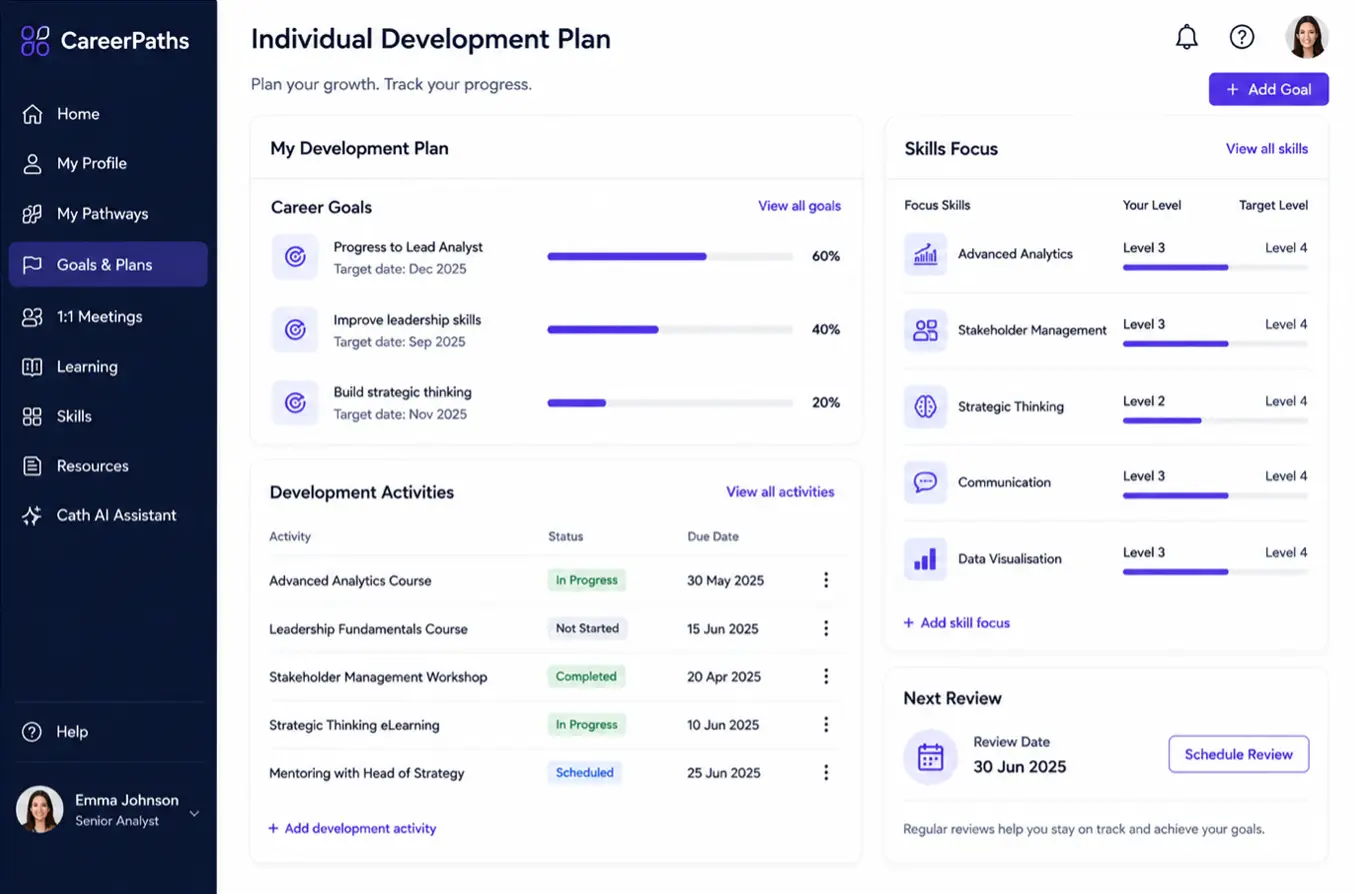
1:1 agendas, agreed actions with statuses and history, progress comments, notifications, and Individual Development Plans that pull goals, gaps, motivations and actions into one living document. This content is sensitive by nature, and it is treated that way — see our Trust Pack for how.
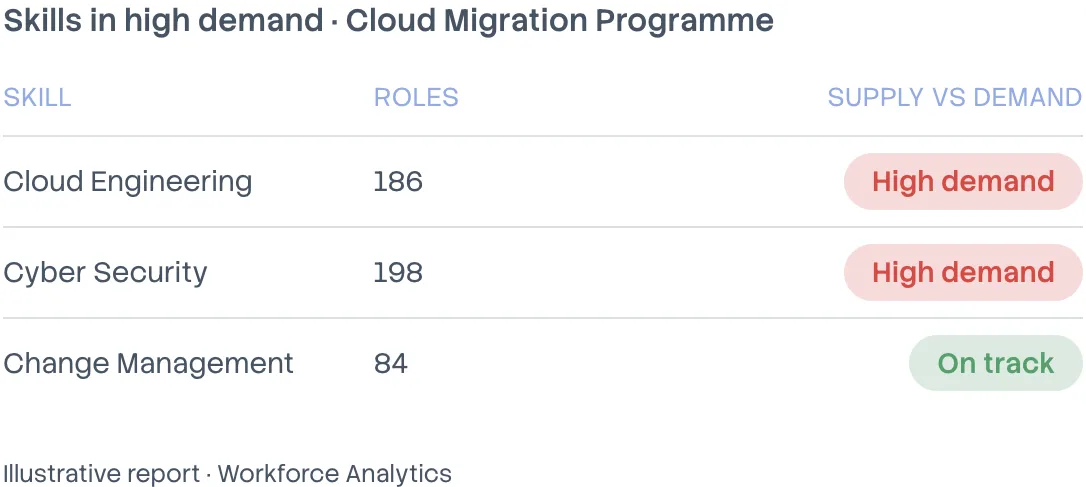
Alignment to organisational goals.
Attach the skills and competencies each organisational goal requires; let employees link their goals to the organisation's. Development effort and business strategy, visibly connected. Reporting against organisational goals is on our roadmap.
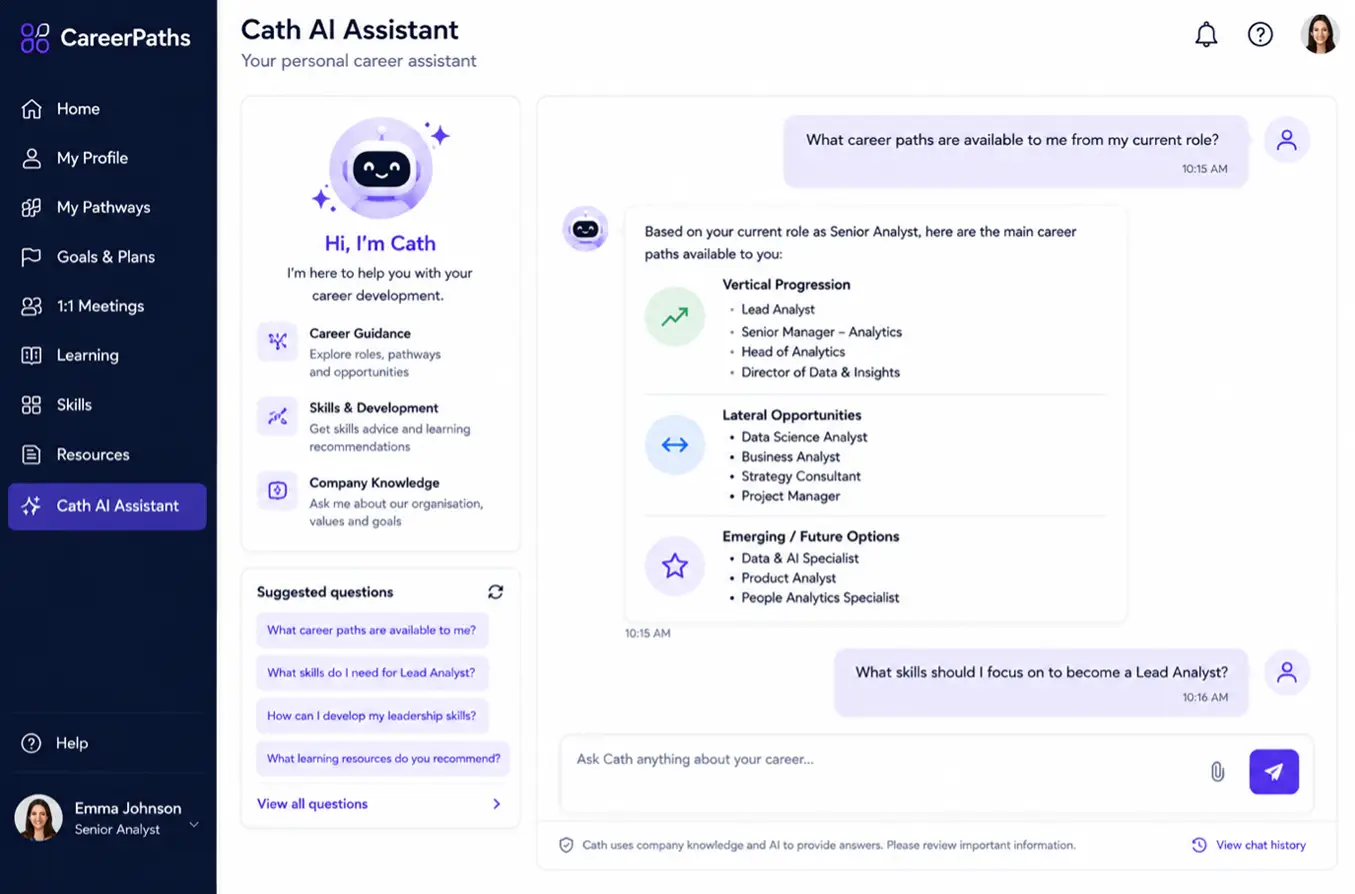
"What roles could I move into?" is easy to ask a chatbot at 9pm and surprisingly hard to ask a manager at 2pm. Cath — grounded in your roles, pathways and resources — gives employees a private, judgement-free way to explore, and helps them arrive at their next 1:1 already informed. Managers use her too: role requirements and pathway options on tap, mid-conversation. Guardrailed to career topics, logged, private to the employee, never used to train AI models.
And if your organisation would rather AI processing happened under your own provider agreement, you can connect your own AI provider and licence keys.
Your HRIS remains the system of record. Bring your structure in by bulk import today, with enterprise single sign-on and SCIM provisioning included in the price and available when released.
Isolated tenants, encryption in transit and at rest, enforceable 2FA, UK hosted, confirmed at controlled beta.
The same career data can power a careers website that shows candidates where a role leads; Explore careers websites and interactive tools that make complex organisations explorable; Explore interactive tools. One source of truth, every audience. Explore how the platform fits together.
Ready to make careers visible?
From £325/month (+vat) including your first 50 users — pricing's public, like everything else about how we work.