

Your industry has brilliant careers. Almost nobody outside it knows.
You're not trying to fill one company's vacancies. You're trying to make an entire sector visible — to school leavers who've never heard of it, to career changers who'd be good at it, and to the people already in it who can't see what comes next.
That's a different problem, and it needs different tools.

An industry is harder to explain than a job
An employer explains one organisation. You're explaining a landscape — dozens of employers, hundreds of roles, entry routes that vary by region and qualification, and progression that crosses company boundaries.
And you're doing it for audiences who don't yet know they're interested. A sixteen-year-old won't search for a job title they've never encountered. A career changer doesn't know your sector has a route in for someone with their background.
Meanwhile your members are asking a fair question: what do we get for our subscription?
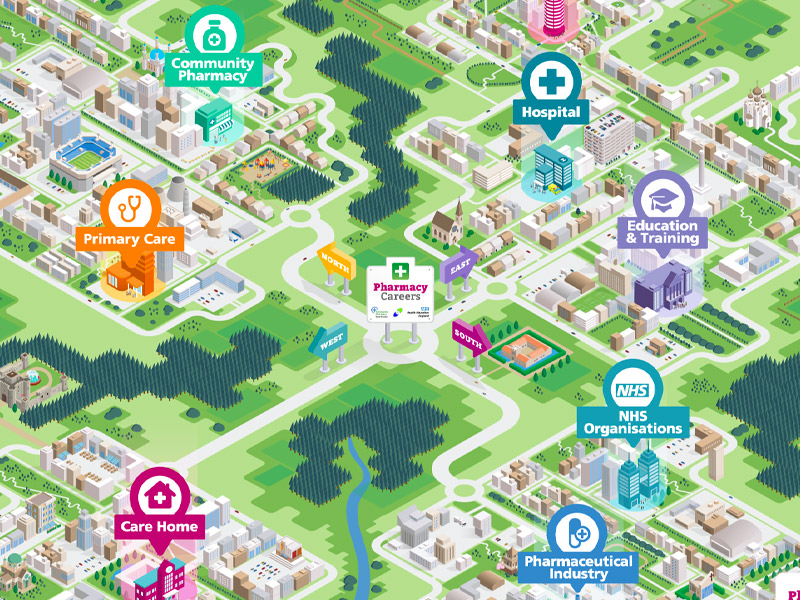
The whole industry, in one explorable map
Every role across your sector, connected by the routes between them. Someone clicks a job they've heard of and finds four they haven't — plus what each involves, what it requires, and where it leads.
Not an org chart. A landscape someone can wander around in.
We built exactly this for NHS England's pharmacy technical services: two connected views, one showing roles and pathways, the other showing the competencies behind them and how they develop.
Your members' vacancies. One place.
A jobs board that carries every member's vacancies rather than one employer's — so somebody drawn in by your career map finds a real, live opportunity at the end of it, and your members see direct value from their membership.
We run these already for the Scotch Whisky Association and the National Skills Academy for Food & Drink, among others.
And your members don't have to post twice. We take job feeds from Workday, Teamtailor, Firefish and TribePad, and we have an API integration with Reed Jobs — so a vacancy posted in the system a member already uses appears on your board automatically.
This is usually the piece that pays for itself. It's the thing members can see, use and measure.
For the audiences who don't know you exist yet

Animated workplace scenes.
A drawn version of a real working environment — a distillery, a production line, a laboratory, a ward. Click the people in it and find out what they do. It's what makes a careers fair stand busy and a school visit memorable.
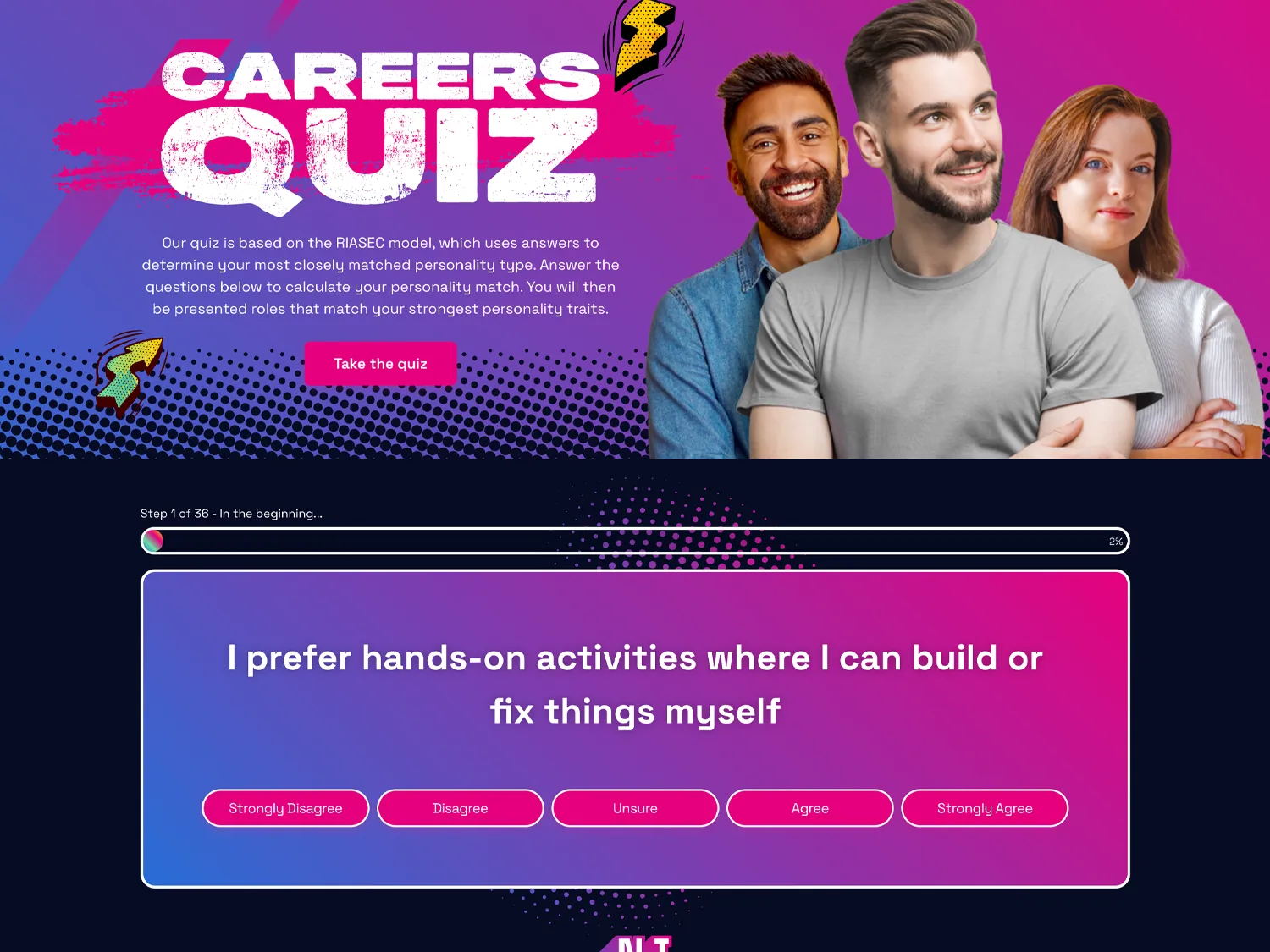
Quizzes and self-assessments.
Help someone work out where in your sector they'd fit, then show them the route and the vacancies.
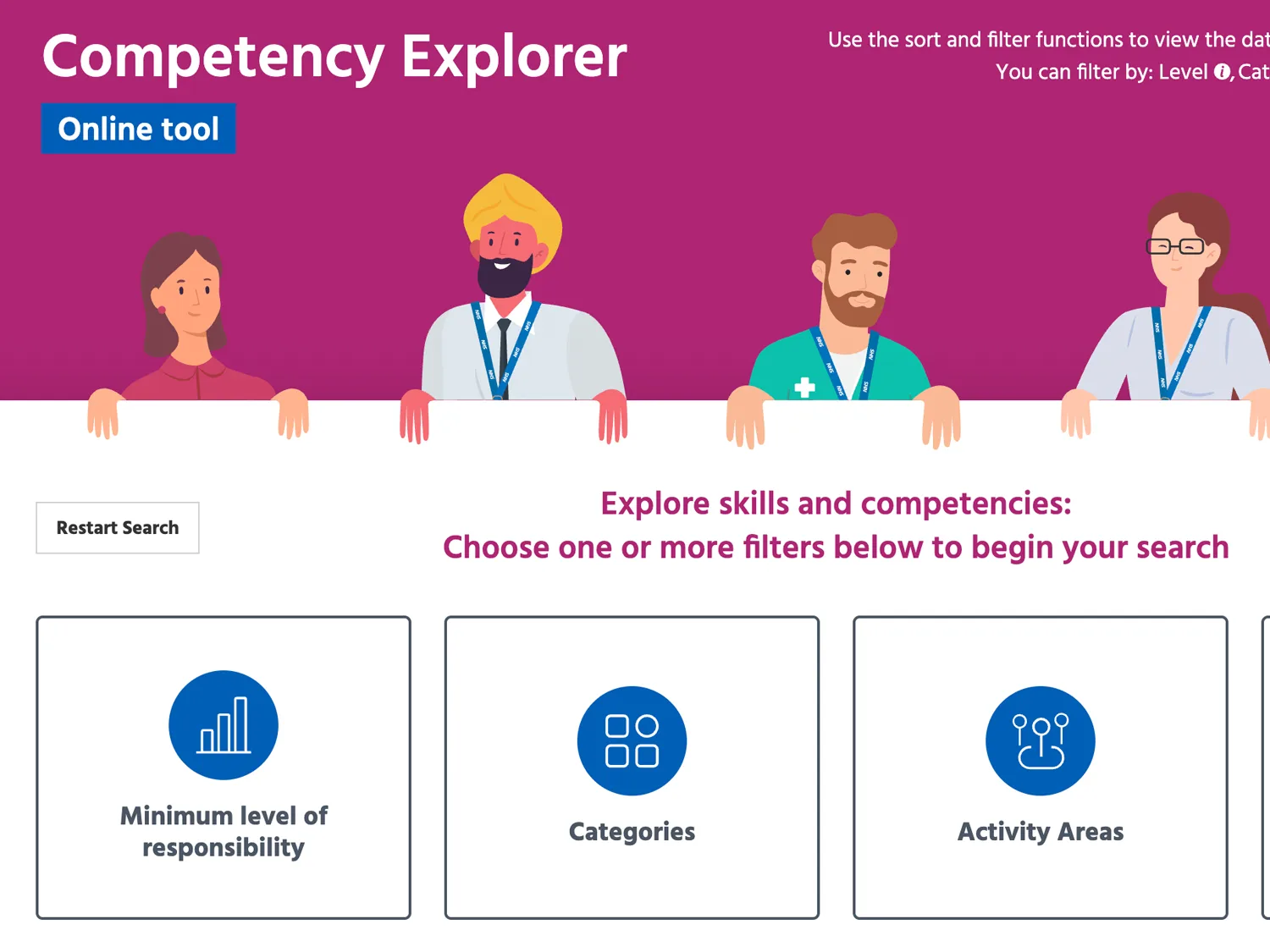
Calculators and bespoke tools.
Entry routes, earnings, training time, qualification comparisons. Whatever your sector's most-asked question is, there's usually a tool that answers it better than a leaflet.
Somewhere for all of it to live
A branded careers site for your sector — hosting the map, the job board, the tools, your member employers and your entry routes. Designed and built by us, hosted and supported by us, and editable by you.
This is the work we've done most
We've built careers websites, sector maps and job boards for the Scotch Whisky Association, the National Skills Academy for Food & Drink, and NHS England, among others — across food, drink, health, science and manufacturing.
Sector bodies aren't a market we've moved into. They're where we started.
The whole process of developing our Careers In Pharmacy website was made so much easier by the team at CareerPaths. They were extremely professional, responsive to our requirements and have a fantastic team of designers, developers and project managers. We are delighted with the result.

Most sector frameworks end up as a PDF nobody opens.
You've probably already done the hard part. Somewhere there's a skills or competency framework for your industry — developed with employers, reviewed by a committee, published as a document.
And then what? Members download it, agree it's sensible, and carry on as they were. The framework describes the sector accurately and changes nothing.
Built in CareerPaths, it becomes something members use rather than read.
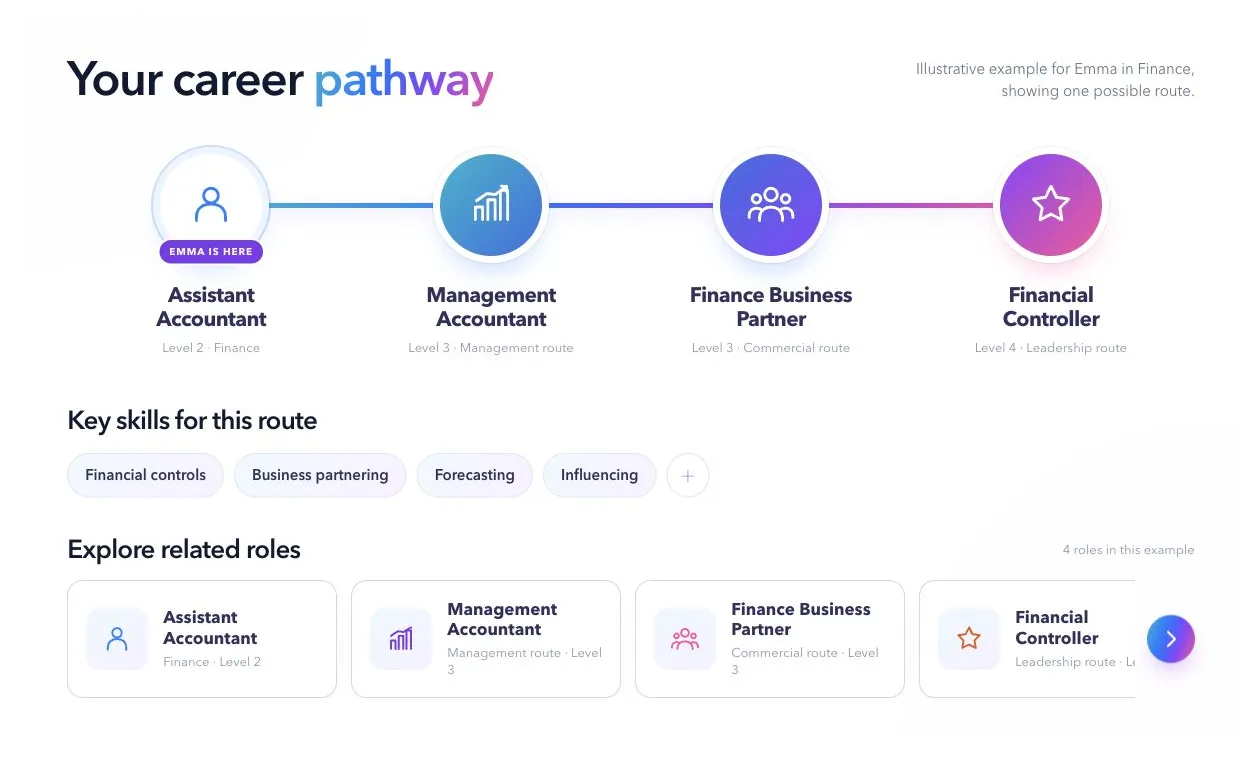
Your sector's roles, skills and competencies exist once, properly structured. Member employers adopting Career Visibility Software start from your framework instead of a blank system — their people see career paths described in your sector's language, mapped to your sector's standards.
Which means:
Your framework is applied, not filed
Members get a substantial head start on setup
The sector describes careers consistently, employer to employer
Your careers map, your job board and your members' platforms all run on the same architecture
It's the same work you're already doing. It just ends up somewhere people encounter it.
Bring your own AI provider
Where an interactive tool or careers site uses our AI career guide, you can run it on your own AI provider under your own licence keys rather than ours.
That matters if your members, your funders or your own governance require AI processing to sit under a contract you control. It's built, it's configurable, and it's not an enterprise upgrade.
What it costs
— half-price setup until 31 December, standard £1,500.
Both carry a 24-month term, with hosting, support and maintenance included, and the files are yours at the end with no exit fee.
A full career navigator or competency explorer for an entire industry isn't a package — we scope it and give you the price in writing, with the work broken down, before anything starts.
If you're working to a funding cycle or a grant deadline, tell us early. We've done this often enough to know how those timetables work.
All prices exclude VAT
Something members can point at
Most member benefits are hard to feel. This one isn't:
Their vacancies, in front of an audience already interested in the sector
Their roles on the map, so candidates understand what the job actually is
Something to hand to schools without producing it themselves
A recruitment channel that doesn't cost them an agency fee
If you need to justify a subscription or report impact to a board or a funder, this is unusually easy to evidence.
Start with the question your members keep asking you.
Thirty minutes to work out whether there's something in it — and an honest answer either way.