

Starting role
Leadership route
Senior leadership
Careers Websites
They looked. They left. You'll never know who.
Before anyone applies, they check you out. Most careers pages give them a list of vacancies — which tells them exactly what you need, and nothing about what it's like to work with you, where the job leads, or why anyone stays. So the ones you'd most want to hire quietly decide you're not for them, and you never find out they were there.
What actually happens
A vacancy is a snapshot. Careers are a film.
Picture your strongest candidate at 11pm, three tabs open, comparing offers.
Your tab shows a job description and a benefits list. Another organisation's tab shows where that same role leads in three years, and an employee who's made that exact journey.
She's not choosing a job. She's choosing a trajectory — and only one tab showed her one.
Your own people are running the same comparison from the inside. If it's easier to see a future on a competitor's careers site than anywhere in your own organisation, that's where the future gets seen.
Attract
Give people something to find when they look you up.
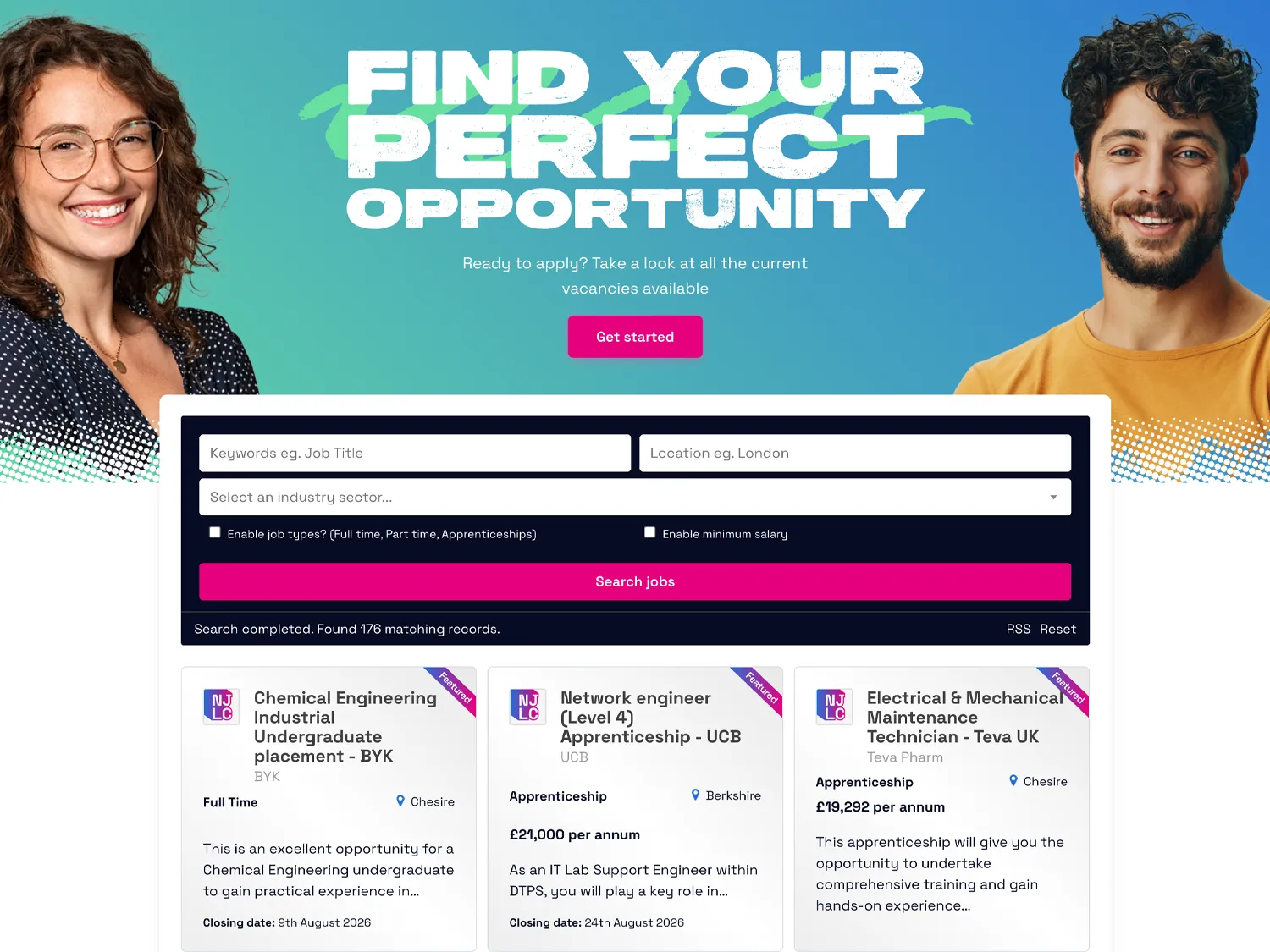
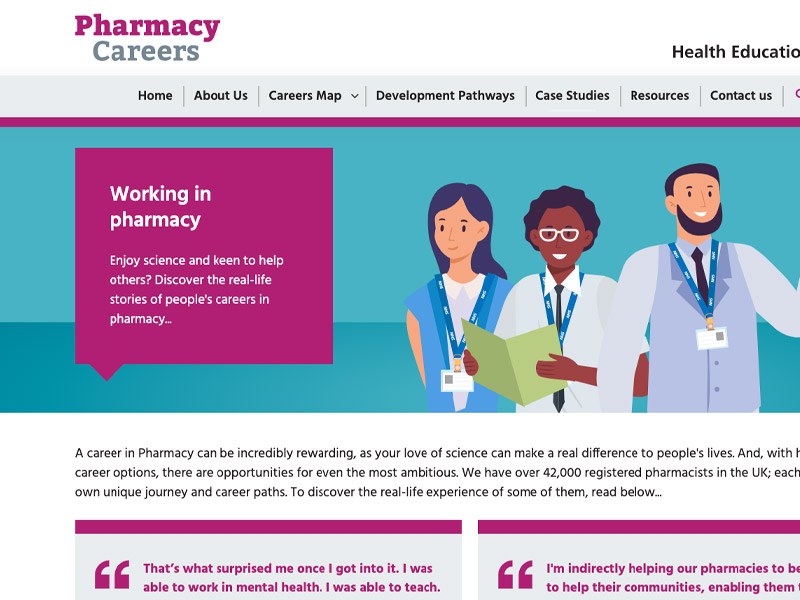
Your brand, your voice, your people — with the substance behind the promise. Department and role pages, culture and values, early careers and apprenticeship routes, written for humans and structured so search engines surface them.
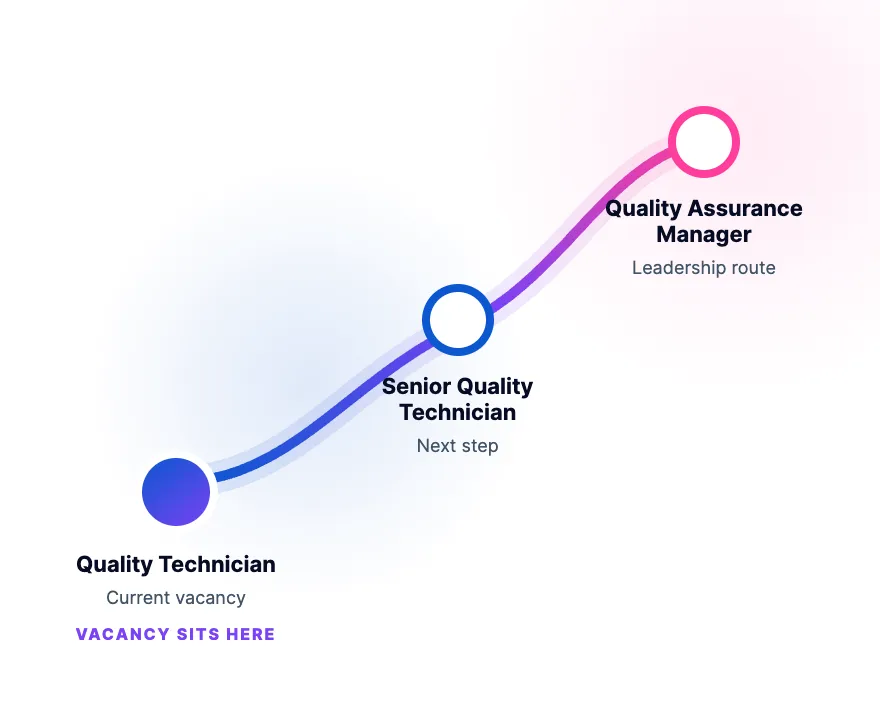
Show people where the job leads.
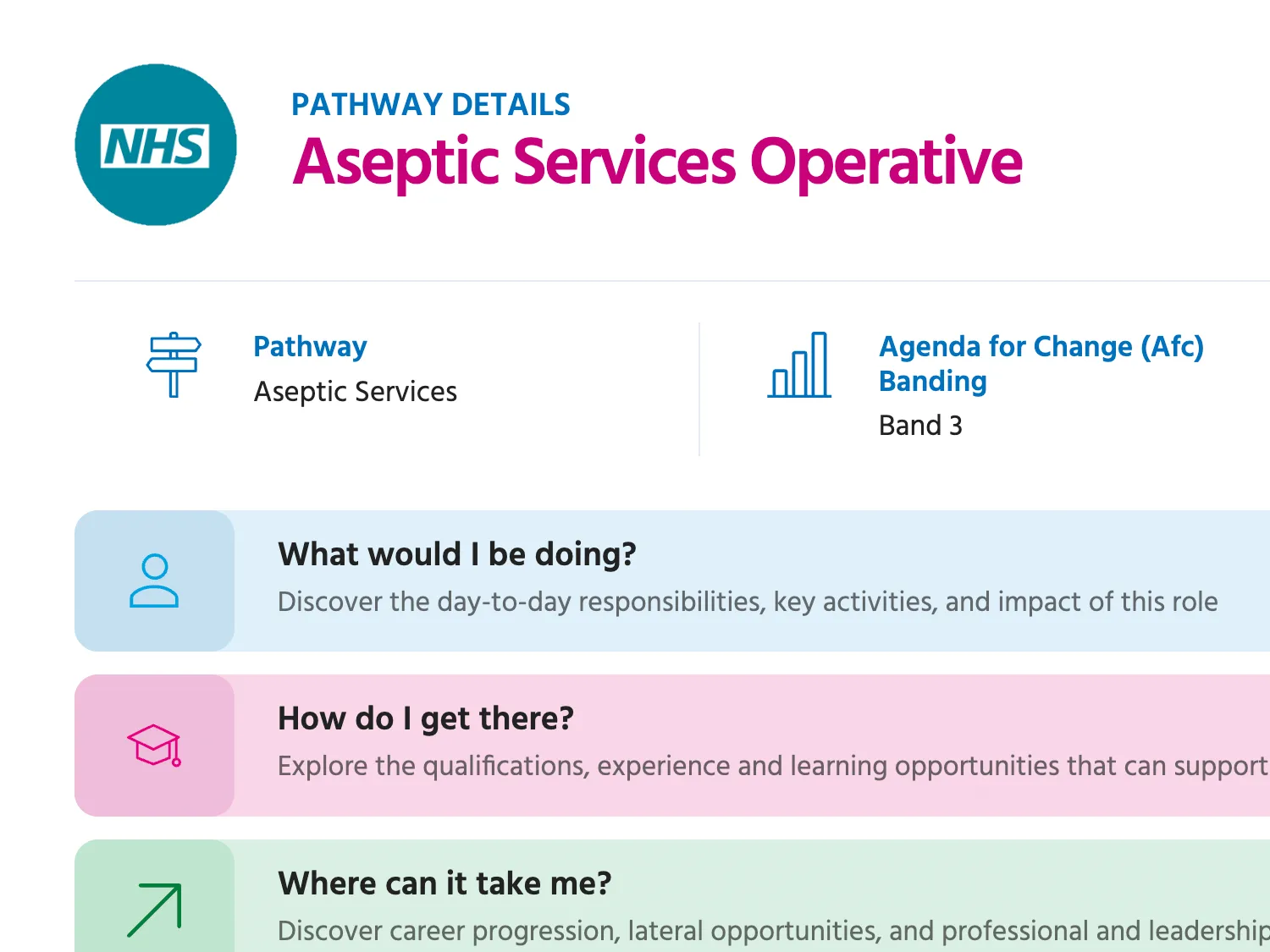
Every role connected to what comes next, so someone can trace a route from where they are to where they'd like to be. It's the difference between advertising a job and offering a career.
Let the people who already work there do the talking.
"I started on the line; I run the site now." The most persuasive thing on any careers site is somebody in the job saying what it's actually like. We build the space for it and help you fill it.
Convert
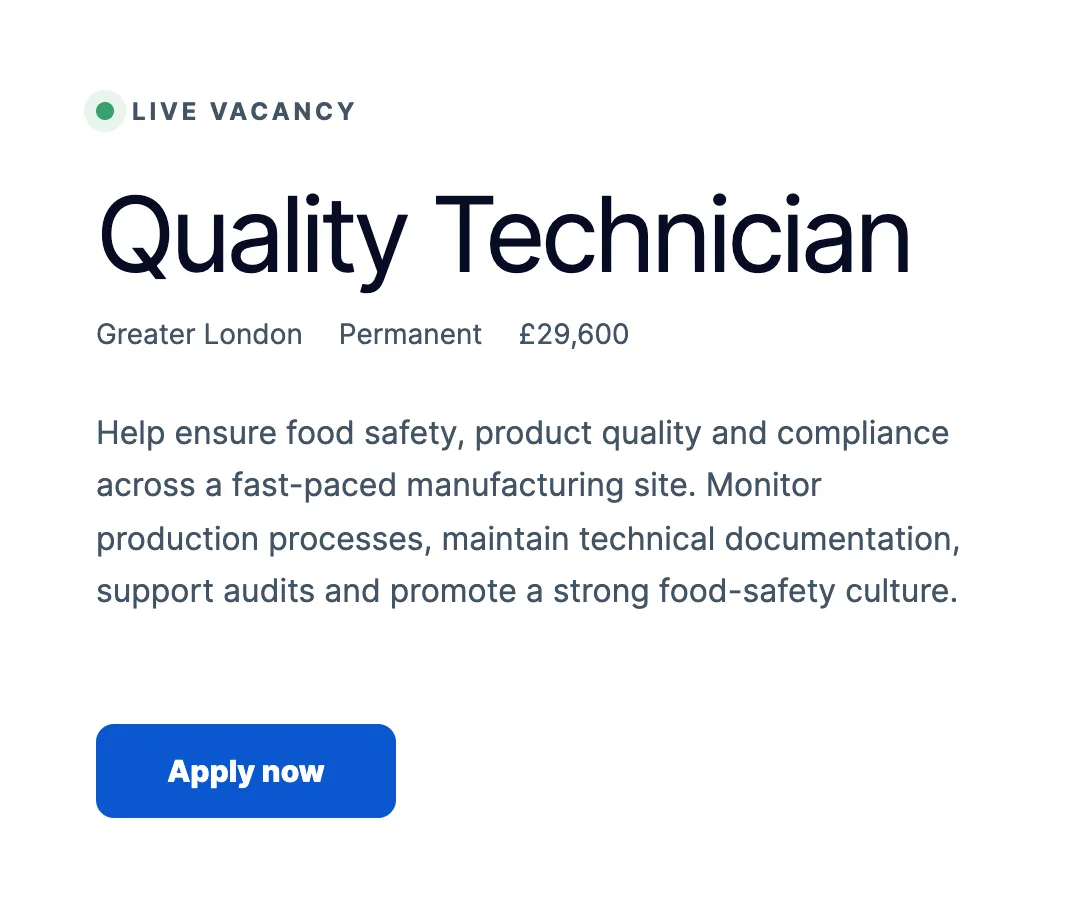
Your vacancies stop being a list.
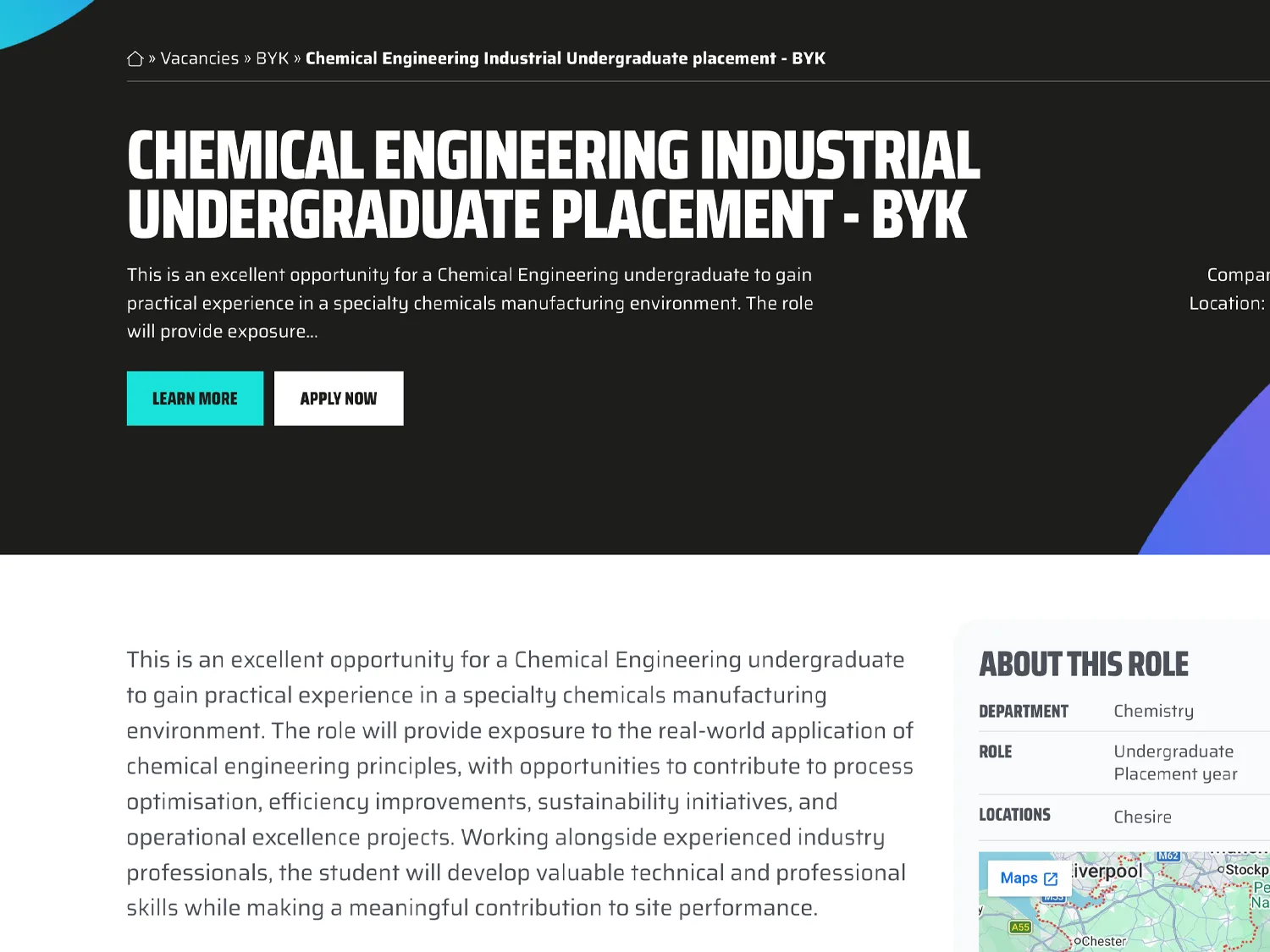
Your jobs board sits inside your careers site — included, not an add-on — and every vacancy is attached to the role it belongs to. So somebody reading a job advert also sees the pathway it sits on.
Same vacancy. Completely different conversation.
Answer the questions people are too polite to ask.
What the work actually involves. What you genuinely need on day one, and what you'll teach. Where people in this role came from, and where they went next.
Candidates self-select better when you're specific. You get fewer applications, and better ones.
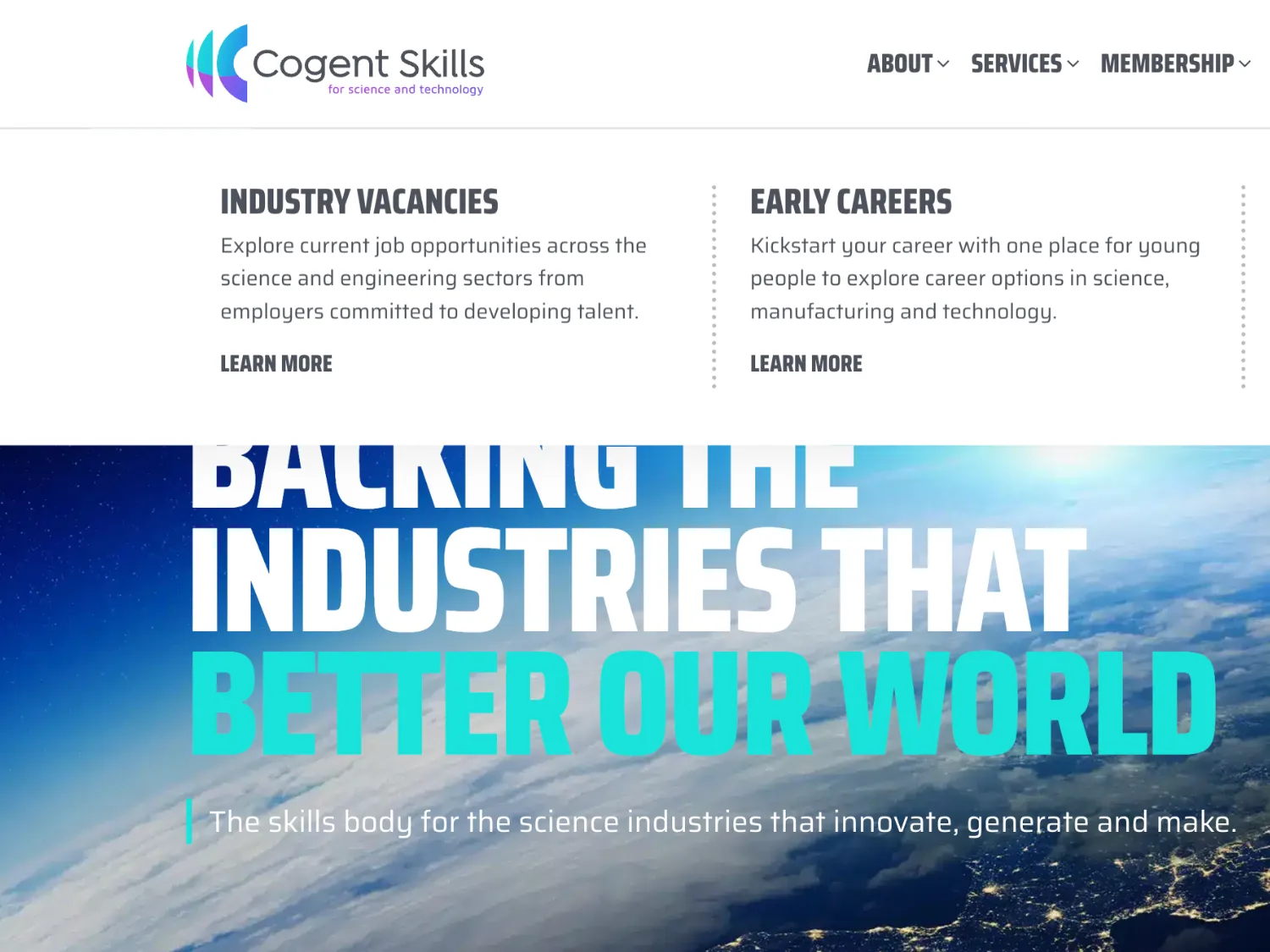
Running a board for more than one employer? We build multi-employer job boards too — every member or partner organisation's vacancies in one place, on one site.
And vacancies can arrive on their own. We currently take job feeds from Workday, Teamtailor, Firefish and TribePad, and we have an API integration with Reed Jobs — so roles posted in the system an employer already uses appear on your website's job board without anyone posting them twice.
Retain
The people you already have are reading this too.
Internal mobility fails when internal jobs are harder to discover than external ones. For most organisations, the careers site is the only place where the shape of a career is written down at all — which means your own people use it more than you'd expect.
Build the thing that shows a future, and it works in both directions.
WHAT DOES THE CONVINCING?
Design gets attention. Content gets applications.
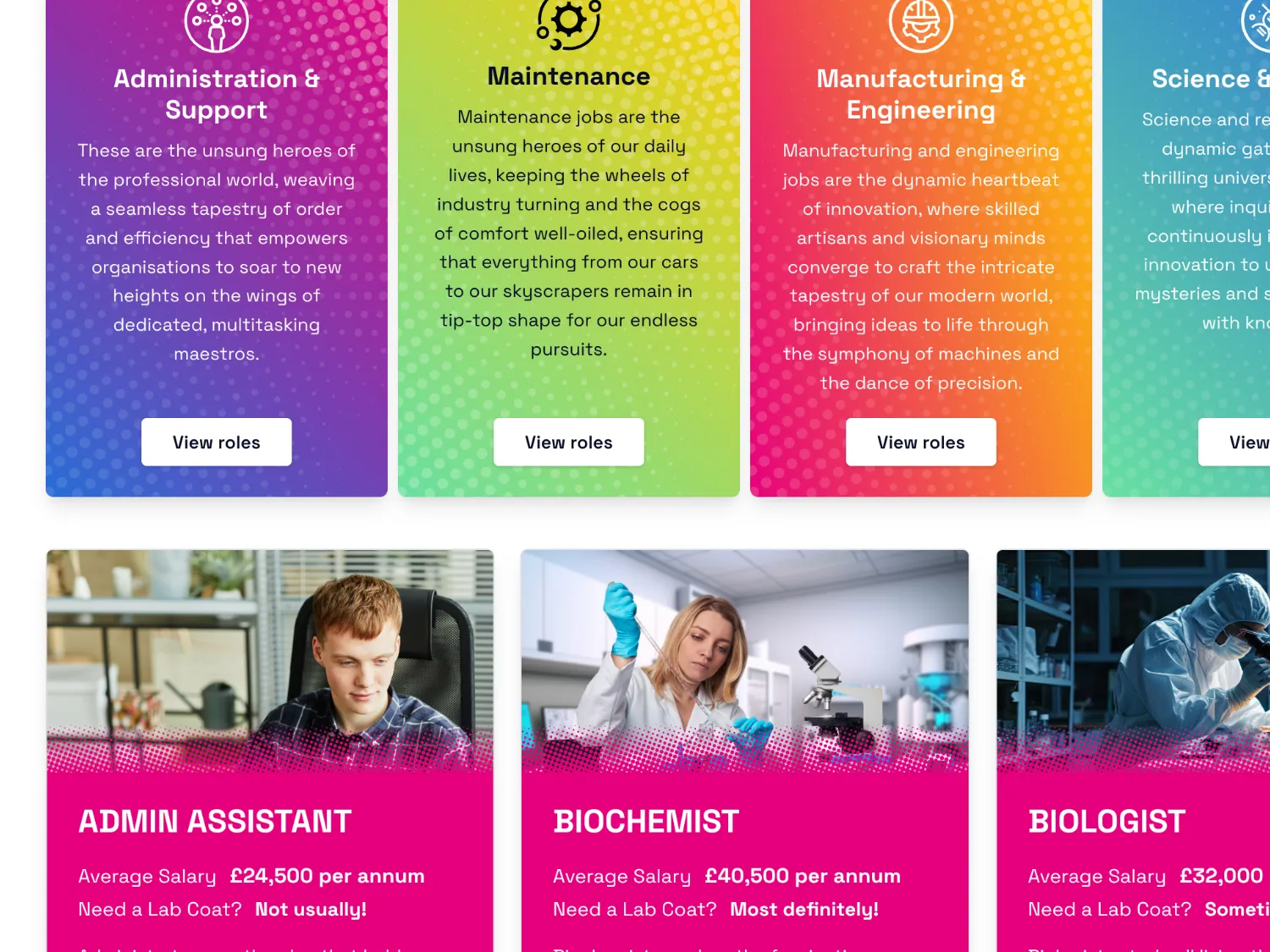
We help you create the pieces that move somebody from curious to convinced: role profiles written for humans, day-in-the-life features, progression stories from real employees, department explainers, candidate FAQs, and landing pages for the audiences you most need to reach.
For sector bodies and membership organisations, the same machinery presents an entire industry's pathways — not just one employer's.
WHAT YOU'RE ACTUALLY GETTING
Not just a website. A system.
Most careers sites are pages. Someone types a role description into a page, and eighteen months later nobody can remember which pages are current.
Yours works differently. Your roles, your career framework and your vacancies live in one place, structured and managed by you — and your careers site is built from that.
Which means your career framework is an asset rather than a document. It's maintained once, in one place, by whoever owns it. Not scattered across pages, PDFs and someone's spreadsheet.
And if you add Career Visibility Software later, you're not migrating anything. It's the same system — you're switching more of it on.
The practical bits
The things you'd otherwise have to ask
It works on the phone in someone's hand.
Most people meet your careers site on a phone, on a break, thinking about changing their life. It's built to be fast and legible there, and to work for people using a screen reader or navigating by keyboard. Checked against WCAG 2.2 AA before launch.
You can change it yourself, whenever you like.
Update your content as often as you want without raising a ticket or waiting for us. And when you'd rather we did it, we will.
Built to be measured.
Analytics and enquiry tracking show which pathways people explore, which roles draw interest and where visitors drop off. Your careers site stops being a brochure and becomes an instrument.
And when a website isn't enough
Some careers you have to see to understand.
If your industry isn't obvious from the outside — technical, clinical, industrial, specialist — a careers site can only take you so far.
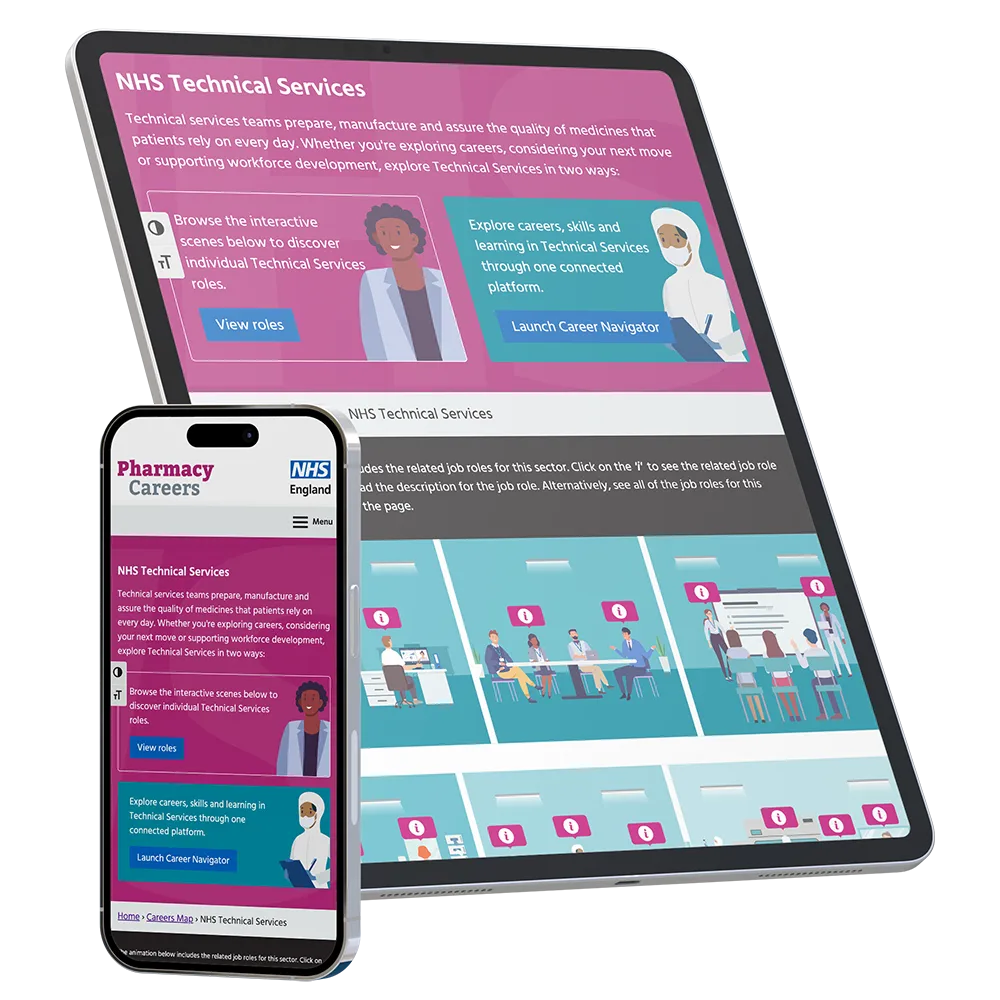
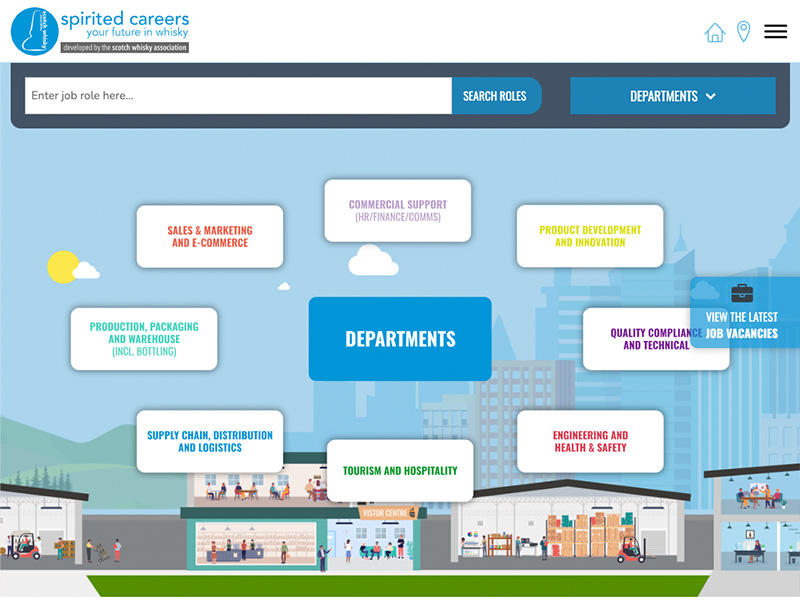
Animated workplace scenes.
A drawn version of a real environment. Click the people in it and find out what they do. The thing that makes a careers fair stand busy and a school visit memorable.
Interactive careers maps
Interactive career maps — built for complex organisations, technical roles and early-careers audiences who won't read a PDF but will click a map.
Something built for you
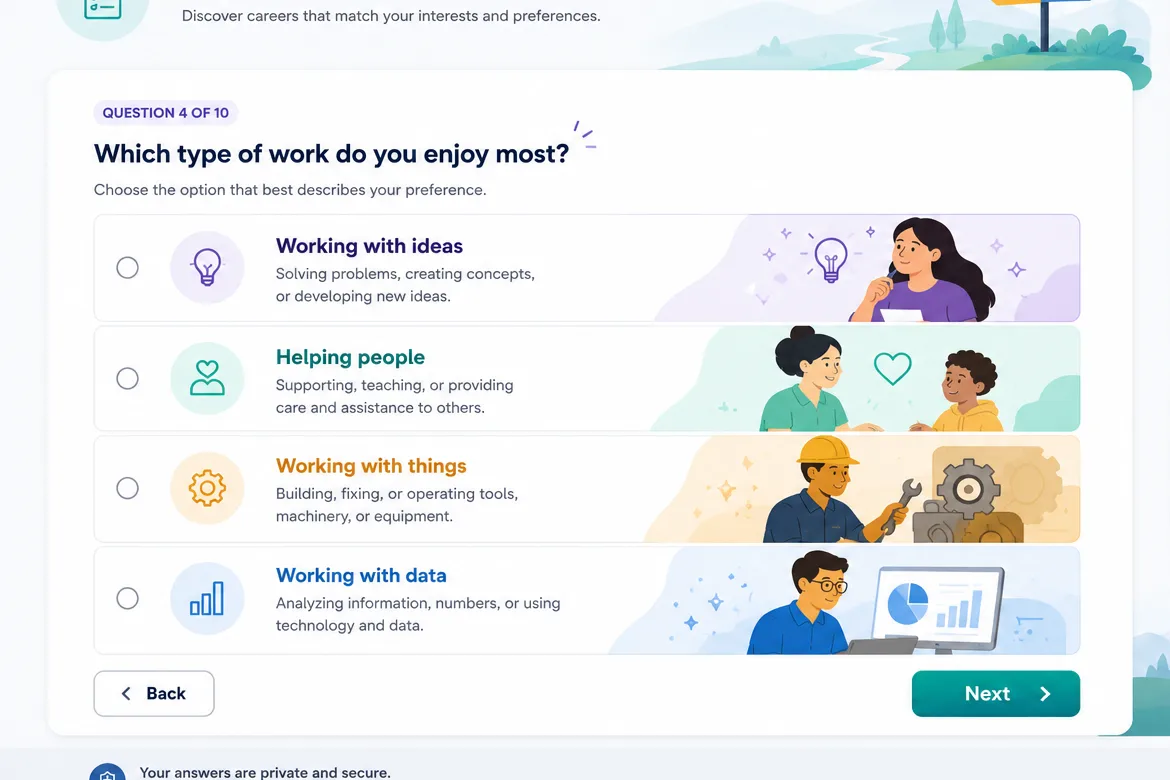
Competency explorers, calculators, self-assessments and quizzes. We've built these for national bodies, and they usually start with somebody saying "people keep asking us X and we've never had a good way to show them."
What's coming - ON OUR ROADMAP
What we're building next
We'd rather tell you what's coming than imply it's already here.
01
On our roadmap
Live sync from Career Visibility Software.
Change a role once in the software and see it update across your careers site, rather than maintaining it in two places.
02
On our roadmap
Cath on your careers site.
Our AI career assistant answering candidate questions from your own content, at 11pm, when they're actually deciding.
03
On our roadmap
An internal careers hub behind single sign-on
The same architecture turned inward, so employees explore opportunities and pathways in a private space.
04
On our roadmap
ATS integration.
Job vacancies held in the platform alongside roles and pathways, so your careers site and job board are powered from the same source as everything else. Multi-employer job boards and ATS integrations are available today on careers websites; this brings them into the software.
Meet Cath- Coming soon
Cath answers candidates at 11pm. That's when they're deciding.
Add Cath to your careers site and every visitor gets an instant, accurate answer drawn from your own careers content: *Where could this role lead? What development would I get? What's it like to work in this team? What's open right now?* No form to fill in, no waiting for Monday — and every question asked is logged insight into what candidates actually want to know, which is a content strategy handed to you for free.

Cath · Career assistant
Where could a customer support role lead?
You could progress to Senior Adviser, move into coaching, or build towards a Customer Experience Lead role. Would you like to explore the pathway?
What development support would I get?
New starters receive a structured onboarding plan, a named mentor and access to role-specific learning pathways.
FIFTEEN YEARS OF THIS
We've been building these since before it was fashionable.
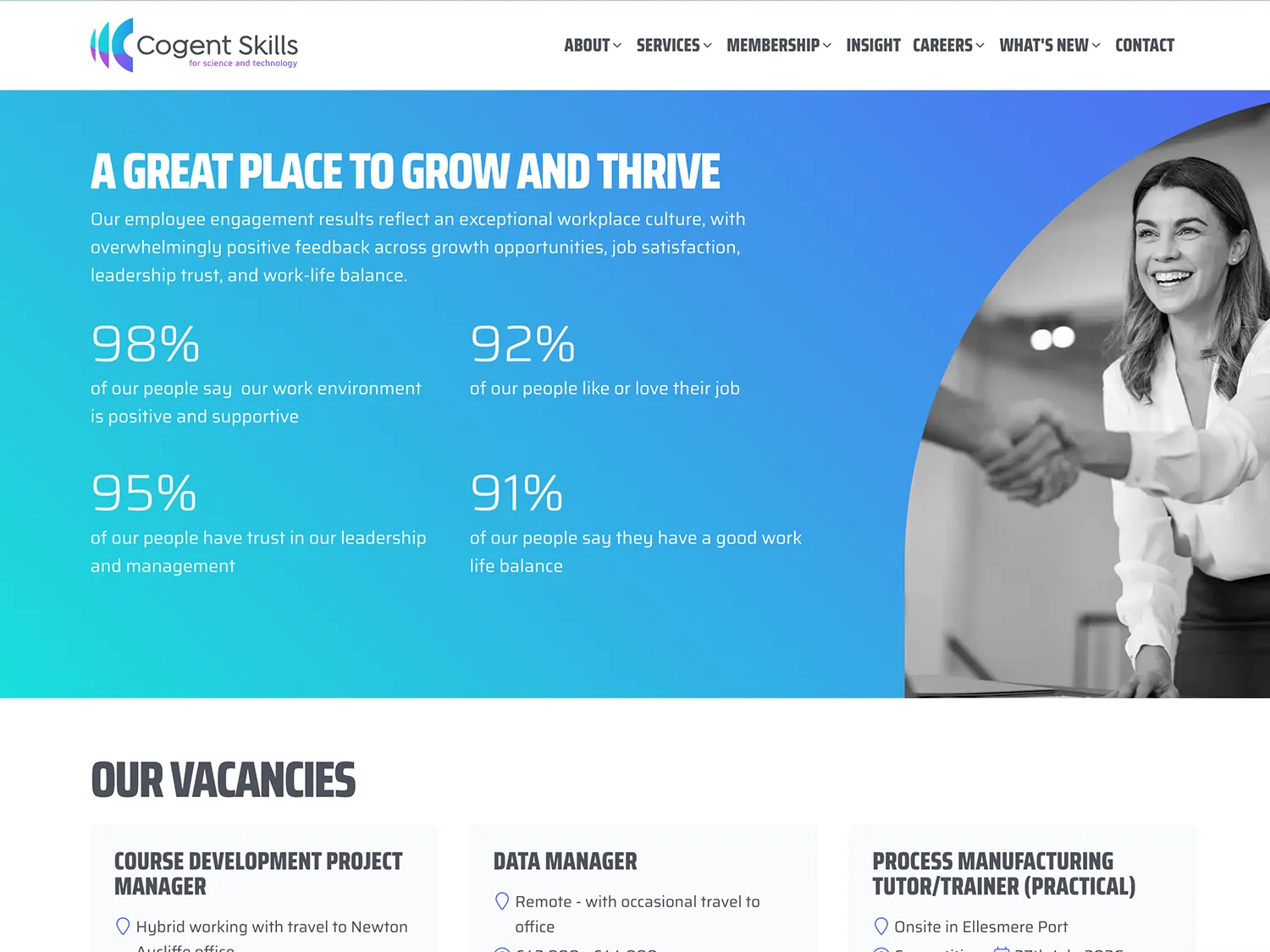
The Scotch Whisky Association. NHS England. The National Skills Academy for Food & Drink. Sector bodies, membership organisations and employers across food, drink, health, science and manufacturing.
What's included
Everything you need to launch and maintain your careers website
From initial design and build through to ongoing support and maintenance, everything you need for a professional, accessible careers website is included.
- Homepage, about, benefits and contact
- Department pages
- Searchable job role pages
- Employee stories / case studies
- Careers advice and resources pages
- Searchable jobs board; included in the monthly fee, no add-on.
- Unlimited role profiles, vacancies and career pathway visualisations pages when powered by our software, included with every careers website.
- All other pages above 30 - quoted separately
- Multi-employer job board - quoted separately
- ATS job feed integration - currently available for Workday, Teamtailor, Firefish and TribePad, plus a Reed Jobs API. One off fee quoted per new integration
- Ongoing maintenance / security updates
- Checked against WCAG 2.2 AA
- Standard hosting, SSL, CMS access, analytics
- 3x revisions during build & 2x 30 minute ongoing updates included per month thereafter.
- WCAG 2.2 AA accessibility target
- Optional multi-languages - quoted separately
Prefer to speak with someone first?
Book a discovery call
Start with career visibility. Extend it everywhere.
A careers website should do more than list vacancies. Show candidates where each role can lead, bring complex organisations to life with interactive career tools, and keep every experience consistent through one source of truth. Explore how the platform fits together.

Clear pricing
It used to be a capital project. Now it's a subscription.
A careers website used to mean a five-figure budget line, a business case and a wait for approval. That's why so many organisations still don't have one. £750 to start, then £475 a month. Hosting, support, your jobs board and everything above, included. Setup half price until 31 December — standard setup £1,500. Minimum 24-month term and it's yours at the end. Prices exclude VAT.

Platform
OverviewCareer Visibility SoftwareCareers WebsitesInteractive Careers ToolsPricingROI CalculatorRoadmap
Copyright © 2026 All Rights Reserved
CareerPaths is a brand of loyaltyMATTERS Ltd